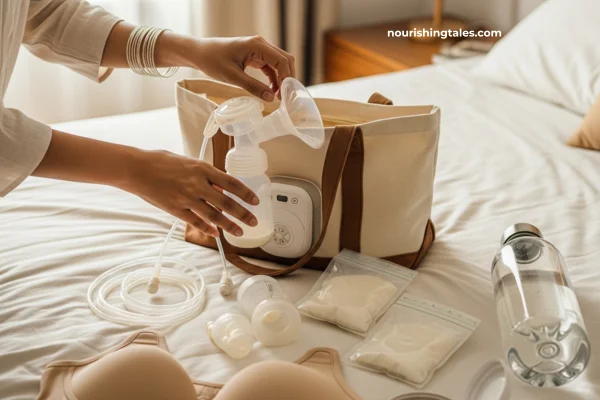
Baby refuses bottle situations create a unique kind of parental stress, especially here in India when your maternity leave is ending and that return-to-work date on the calendar feels like it’s racing towards you.
You look at your beautiful baby, who wants nothing to do with a bottle, and your heart starts to pound. Bottle refusal is a puzzle, not a battle. We are not going to force anything. Instead, we are going to become gentle detectives, trying small, loving experiments to discover what works for your unique little one. Let’s explore this together with patience and kindness.
Step 1: Let’s Check the Tools
Before we change our approach, let’s make sure the bottle itself isn’t the problem. Sometimes, a simple technical tweak is all it takes.

- Check the Teat Flow. A gush of milk from a fast-flow teat can be overwhelming for a baby who is used to controlling the pace at the breast. Always start with the slowest flow teat available (often labelled “newborn,” “preemie,” or “0”), no matter how old your baby is.
- Experiment with Teat Shape. The market is flooded with options, but the “best” bottle is simply the one your baby accepts. If a wide-neck bottle isn’t working, try a standard, narrow one next. You don’t need to buy ten different brands at once; just try one of a completely different shape or material. For more guidance, you can explore our complete rundown of the best bottles for breastfed babies.
- Get the Temperature Just Right. We call this the “Goldilocks problem.” Some babies want their milk at precisely body temperature (around 37circtextC), while others surprisingly prefer it a little cooler or warmer. Use your inner wrist to test—it should feel neutral, neither hot nor cold.
- Check for High Lipase. Does your thawed frozen milk have a slightly soapy or metallic taste? This could be due to high levels of lipase, a harmless enzyme that helps digest fat. Some babies don’t mind it, but others do. If you suspect this is the issue, you can try mixing thawed milk with fresh milk. And for future freezing, properly warming the milk can help. We cover this and more in our guide on how to thaw and warm breast milk safely.
Step 2: Change the Scenery

Your clever baby works on associations. If you’re in the usual nursing chair, they expect the breast. By changing the context, we can open them up to a new experience.
- Let Someone Else Offer the Bottle. This is the single most effective strategy for many families. Your baby can smell you from metres away, and your scent screams “nursing time!” Ask your partner, a grandparent, or a trusted caregiver to take over bottle-feeding duties. For the first few tries, it’s incredibly helpful if you are completely out of the house.
- Find a New Location. Don’t try to give the bottle in your usual nursing spot. Try feeding in the living room by a window, in the garden, or in a different room altogether.
- Time it Perfectly. Offering a bottle to a screaming, hungry baby is a recipe for frustration. A hungry baby wants instant comfort, not to learn a new skill. Instead, aim for a time when your baby is calm and receptive, like 30 minutes before they’re usually hungry or just as they are waking up from a nap.
- Switch Up the Position. The traditional cradle hold is a strong cue for breastfeeding. Try something new:
- Hold them in a more upright, seated position on your lap.
- Try feeding them while they sit in their bouncer (always supervised!).
- Hold them facing outwards so they can look around the room while they eat.
Step 3: Gentle Tricks and Happy Distractions
Now, let’s focus on making the bottle a positive (or at least neutral) part of their world.

- Use Constant, Gentle Motion. Movement is magic. Offer the bottle while gently swaying, rocking in a chair, bouncing softly on a yoga ball, or walking around the house. The rhythm can be hypnotic and may lull them into accepting the bottle.
- Try the “Bait and Switch.” Start by nursing your baby for a minute. Once they are relaxed and feeding happily, gently unlatch them and smoothly slip the bottle teat into their mouth in one fluid motion.
- Make the Bottle a Toy. To remove the pressure, let your baby hold and play with a clean, dry bottle teat during non-feeding times. This helps them get familiar with the texture and shape on their own terms.
- Master Paced Bottle Feeding. This is non-negotiable! Paced feeding mimics the rhythm of breastfeeding, giving your baby more control and preventing them from being overwhelmed. It involves holding the baby upright and the bottle horizontally, letting them take breaks. It’s a game-changer, so be sure to check out our step-by-step paced bottle-feeding guide.
- Use a “Dream Feed.” A drowsy or sleeping baby has lower defences. You can often gently slip a bottle into their mouth during a nap or at night, and their natural sucking reflex may take over.
- Add a Happy Distraction. A little bit of distraction can go a long way. Try singing a favourite song, turning on some white noise, or standing near a window where they can watch the world go by.
- Offer a Taste. Squeeze a drop of warm milk onto the tip of the teat. That familiar, sweet taste might be just the encouragement they need to start sucking.
- Try Skin-to-Skin. Have the person offering the bottle (especially your partner) do it with their shirt off. That skin-to-skin contact is calming and mimics the closeness of nursing.
Step 4: The Golden Rule: No Pressure, Ever

This is the most important part. Your baby is a finely tuned stress detector. If you are anxious and tense, they will feel it and resist whatever is causing that stress—in this case, the bottle.
- Keep Attempts Short and Sweet. Offer the bottle calmly. If they cry or turn away, stop. Smile, put the bottle down, and say, “That’s okay, we’ll try again later.” An attempt should last no more than 5-10 minutes.
- Never Force the Bottle. This is the fastest way to create a powerful, negative association that is much harder to overcome. We want the bottle to be a friend, not a foe.
- Remember to Breathe. When you feel your frustration rising, stop. Take a five-minute break. Your calm emotional state is the most powerful tool you have.
- Consider Alternatives. If your baby is over 6 months old, remember that bottles aren’t the only option! Many babies who refuse a bottle take beautifully to an open cup, straw cup, or sippy cup.
Final Words of Reassurance
This journey requires patience, creativity, and trust in your baby. For many parents, preparing to pump at the office is the reason this challenge comes up; if that’s you, know there are ways to make that transition smoother. You can read our full guide to pumping at work for practical tips.
Please, throw away any timelines that are causing you stress. Celebrate the tiniest victories—if your baby mouths the teat, that’s a win! If they take just a few sips, that’s huge progress!
Disclaimer: This article is for informational purposes only and does not constitute medical advice. Please consult with your paediatrician or a certified lactation consultant (IBCLC) for personalised guidance.