
A nipple shield is a thin, flexible silicone device placed over the nipple and areola to assist with breastfeeding challenges. While they can be valuable temporary tools, proper technique and understanding of their use is essential for successful breastfeeding outcomes.
When Nipple Shields Are Recommended
Nipple shields may be helpful in specific situations where traditional breastfeeding is challenging:
For Baby-Related Issues:
- Premature infants who need extra stimulation to trigger sucking reflexes
- Babies having difficulty latching due to tongue tie or other oral issues
- Infants who “slip off” the nipple repeatedly
- Babies transitioning from bottle feeding back to breast
For Maternal Issues:
- Flat or inverted nipples that make latching difficult
- Severely cracked or damaged nipples that need protection while healing
- Very soft breast tissue that doesn’t provide firm stimulation
Step-by-step guide on how to use a nipple shield for breastfeeding with proper positioning and latch technique
Proper Application Technique
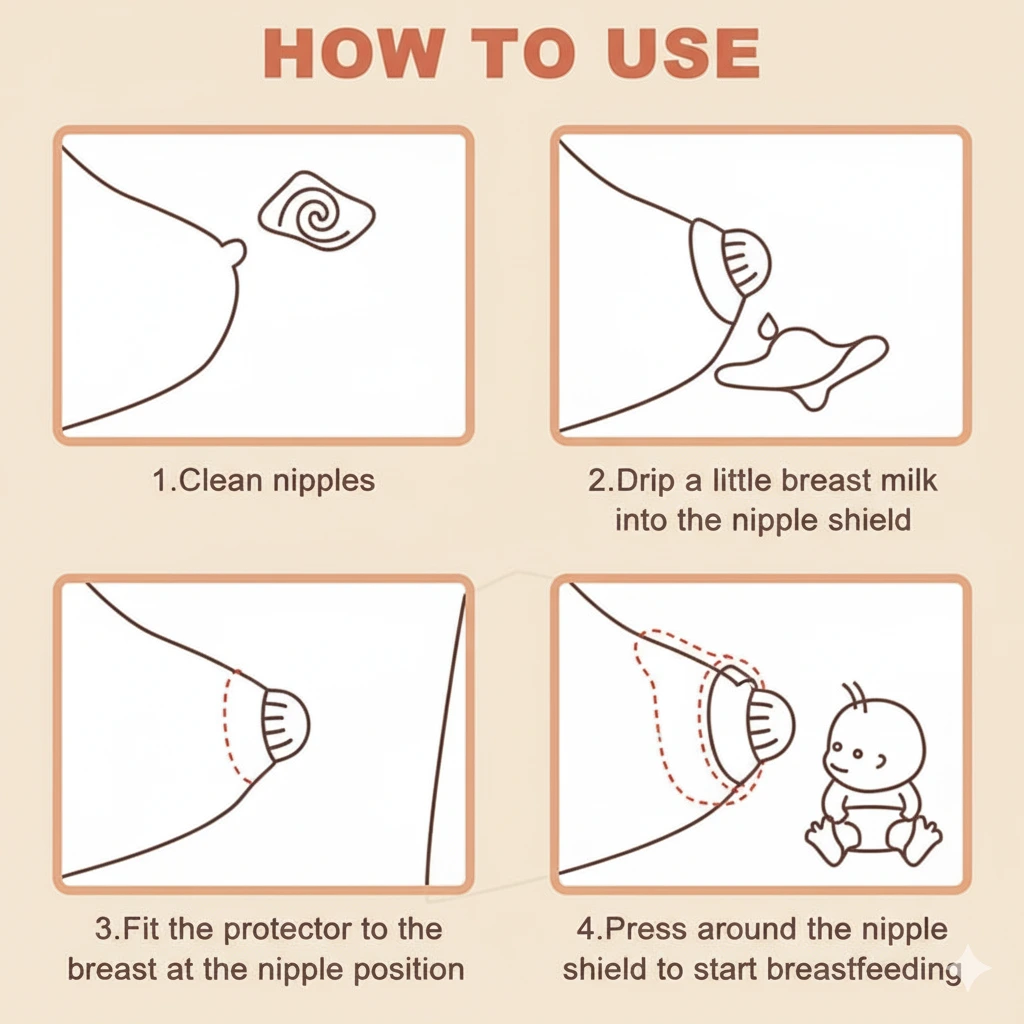
Step 1: Preparation
- Wash hands thoroughly before handling the shield
- Ensure the nipple shield is clean and sterilized
- Wet the edges with lukewarm water or expressed breast milk to help adhesion
Step 2: Shield Application
- Turn the nipple shield inside out partially, creating a “sombrero” shape
- Gently roll or stimulate your nipple to help it become more erect
- Place the inverted shield over your nipple, ensuring your nipple extends deep into the shield tip
- Smooth the edges down onto the breast, creating suction that draws the nipple further into the shield
Step 3: Positioning for Feeding
- Express a few drops of breast milk into the shield tip to encourage latching
- Position your baby nose-to-nipple with their chin touching the breast first
- Wait for your baby to open their mouth wide before bringing them to the shield
- Ensure your baby’s mouth covers the entire shield opening, not just the tip
Sizing and Fit
Proper sizing is crucial for effective milk transfer and comfort:
Measuring Your Nipple:
- Measure the diameter of your nipple (not the areola) using a ruler
- Take measurements when the nipple is erect for accuracy
- Add 4mm to your nipple diameter to determine shield size
Size Guidelines:
- Small (S): For nipples ≤12mm diameter
- Medium (M): For nipples 13-16mm diameter
- Large (L): For nipples ≥17mm diameter
Signs of Proper Fit:
- Your nipple should extend 1/2 to 3/4 of the way into the shield tip
- Leave approximately 2mm space around the sides of your nipple
- The shield should stay in place without excessive movement
Cleaning and Maintenance
Daily Cleaning:
- Rinse with cold water immediately after use
- Wash in warm soapy water using mild detergent
- Rinse thoroughly with clean water
- Air dry on a clean surface or dry with a clean cloth
Sterilization:
- Sterilize before first use and at least once daily
- Boiling method: Boil in water for 5 minutes
- Microwave method: Use manufacturer’s sterilization case with water for 3 minutes at 750-1000W
- Cold sterilization: Use Milton or similar sterilizing solution for at least 30 minutes
Monitoring Effectiveness
Signs of Successful Use:
- Baby appears satisfied after feeding
- You can hear swallowing sounds during feeding
- Baby has at least 6 wet diapers per day
- Consistent weight gain according to pediatric guidelines
Warning Signs:
- Persistent pain during feeding despite proper application
- Decreased milk supply over time
- Baby showing signs of inadequate milk intake
- Shield causing blisters or new nipple damage
Weaning from Nipple Shield
Nipple shields are intended as temporary solutions. Most babies can transition away from them as they grow stronger and develop better oral coordination:
Gradual Transition Strategies:
- Start feeds with the shield, then remove mid-feeding once milk is flowing
- Try direct latching when baby is calm but alert, not overly hungry
- Practice skin-to-skin contact to encourage natural feeding behaviors
- Attempt direct latching at night feeds when baby may be more relaxed
Timeline Expectations:
- Most premature babies can wean by their expected due date
- Full-term babies often transition within 8-12 weeks
- Some babies self-wean when they become impatient with shield application
Important Considerations
Professional Support:
Always work with a qualified lactation consultant when using nipple shields. They can ensure proper sizing, technique, and monitor your breastfeeding progress.
Potential Risks:
- Reduced milk supply if milk transfer is inadequate
- Increased risk of blocked ducts or mastitis from poor breast drainage
- Baby becoming dependent on the shield, making weaning more challenging
Monitoring Requirements:
- Weekly weight checks for babies using shields regularly
- Regular assessment of milk supply adequacy
- Ongoing evaluation of whether the underlying issue has resolved
Nipple shields can be valuable tools for overcoming specific breastfeeding challenges when used correctly under professional guidance. Success depends on proper sizing, correct application technique, and appropriate monitoring to ensure both mother and baby are thriving throughout the breastfeeding journey.