I’ll be honest with you, I dreaded introducing bottles with my first baby. Would she reject the breast? Would she gulp down too much milk and spit up everywhere? Would we end up with a drawer full of expensive bottles she refused to touch?
After three kids and more hours of research than I’d like to admit, I’ve learned that finding the right bottle isn’t about the fanciest design or the most expensive brand. It’s about understanding what actually matters for a breastfed baby, and that boils down to one crucial thing: the nipple.
Why the Nipple is Everything (And the Bottle is Just a Container)
Here’s what most lactation consultants and pediatric feeding specialists agree on: the bottle itself is simply a vessel. The real magic or the potential problem is in the nipple design.
When your baby nurses at your breast, they’re doing some pretty impressive work. Their mouth opens wide (think almost 180 degrees), their lips flange outward, and their tongue moves in a wave-like motion to draw milk out. It takes genuine effort, and that’s actually a good thing it helps develop their oral muscles and gives them control over the feeding pace.
A poorly designed bottle nipple can completely change this dynamic. If the milk flows too fast or the nipple is too narrow, your baby might develop what experts used to call “nipple confusion” (now more accurately termed “nipple preference”). They’re not confused, they’re just learning that one feeding method requires way less work than the other.
The 4 Non-Negotiable Features for a Breastfeeding-Friendly Bottle
After reviewing recommendations from multiple IBCLCs (International Board Certified Lactation Consultants) and pediatric feeding specialists, here’s what actually matters:
1. A Slow-Flow Nipple is Absolutely Essential
This is the hill I’ll die on. Slow-flow nipples are critical for breastfed babies.
Think about it this way: when your baby nurses, they control the flow by how hard they suck. With a standard fast-flow bottle, milk can pour into their mouth whether they’re actively sucking or not. This teaches them that bottles are easier than breasts, and suddenly you’ve got a baby who fusses at the breast because they expect instant gratification.
A slow-flow nipple (sometimes labeled as Level 0, Level 1, Newborn, or Preemie) requires your baby to actively work for their milk, just like at the breast. This prevents them from developing a preference for the “easy” option and keeps them in control of the feeding pace, which reduces choking, gulping, and air intake.
Important note: Some babies will stay on a slow-flow nipple indefinitely, even past 6 months, and that’s perfectly fine. Don’t feel pressured to move up to faster flows just because of your baby’s age.
2. A Gradually Sloped, Wide-Base Nipple
Watch your baby the next time they latch onto your breast. See how their mouth opens incredibly wide? That deep latch on your areola not just the tip of your nipple is what makes breastfeeding comfortable and effective.
To encourage this same healthy latch on a bottle, look for a nipple with a wide base that gradually slopes to the tip. This cylindrical, gradually tapered shape allows your baby to get a deep latch and use the same jaw and tongue movements they use at your breast.
What to avoid: Nipples with a long, narrow tip that abruptly widens at the base. These look like they mimic a breast, but they actually encourage a shallow, “straw-like” suck that uses entirely different muscles. Many popular brands (like Comotomo, Tommee Tippee, and NanoBebe) unfortunately fall into this category, despite their marketing claims.
3. Soft, Flexible Silicone
Your breast is soft, warm, and wonderfully pliable. When your baby latches, your nipple molds to the shape of their mouth. A bottle nipple should replicate this as closely as possible.
Look for nipples made from 100% soft, flexible medical-grade silicone. When you press the tip, it should feel pliable and move easily. This softness allows for the natural, wave-like tongue motion your baby uses at the breast, making the transition feel much more seamless.
4. An Effective Venting System
Those little bubbles you see rising in the bottle as your baby drinks? That’s actually a good sign. An effective venting system allows air to enter the bottle as milk flows out, which prevents a vacuum from forming.
Without proper venting, the nipple can collapse, forcing your baby to break their latch and often swallow gulps of air. This can lead to more gas, spit-up, and general discomfort. Research shows that babies fed with anti-colic bottles experienced less fussing and colic symptoms compared to those fed with conventional bottles.
The Material Question: Glass, Plastic, or Silicone?
The material of the bottle itself often comes down to personal preference, lifestyle, and budget. Here’s what the research says:
Glass Bottles
Glass is the most chemically stable option it won’t leach chemicals or shed microplastics, even when exposed to high heat. It’s incredibly easy to clean, resists stains and odors, and is 100% recyclable.
The downsides? They’re heavier (which can make them harder for babies to hold) and they can break, though modern glass bottles use tempered, thermal shock-resistant glass and often come with protective silicone sleeves.
Plastic Bottles
Modern BPA-free plastic bottles are considered safe by health authorities, but here’s what many parents don’t know: even BPA-free plastics can shed microplastics and leach other endocrine-disrupting chemicals when exposed to repeated heat. Research shows that infants fed with plastic bottles may ingest an average of 1.6 million microplastic particles per day when bottles are heated, shaken, or sterilized.
The benefits? They’re the most affordable, lightweight, and durable option.
Silicone Bottles
Silicone offers a middle ground, it’s lightweight like plastic but much more heat-stable and doesn’t leach chemicals. Food-grade silicone can withstand temperatures up to 450°F without degrading. The soft, squeezable body can also feel more comforting to babies.
The main consideration is ensuring you’re buying true food-grade silicone, as lower-quality silicone may still leach chemicals when heated.
5 Top Bottle Picks for Breastfed Babies (Available in the USA)
After reviewing recommendations from lactation consultants and analyzing hundreds of parent reviews, here are the bottles that consistently get high marks:
1. Lansinoh Breastmilk Feeding Bottle
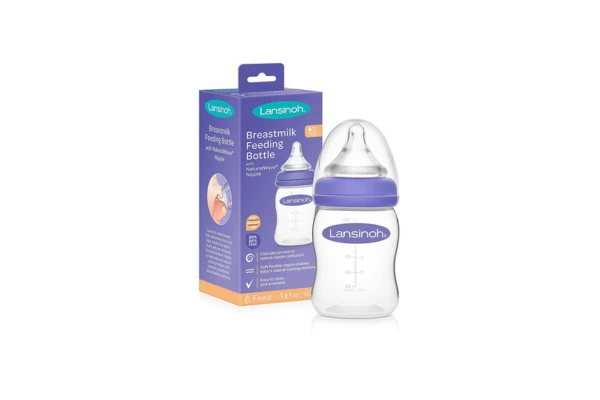
This is the bottle many lactation consultants recommend first. The nipple has that ideal gradually sloped shape with a wide base, it’s only three pieces (making it super easy to clean), and it has an effective anti-colic vent.
Where to buy: Amazon, Target, Walmart, Buy Buy Baby
Price range: About $5-7 per bottle
2. Pigeon PPSU Wide Neck Bottle
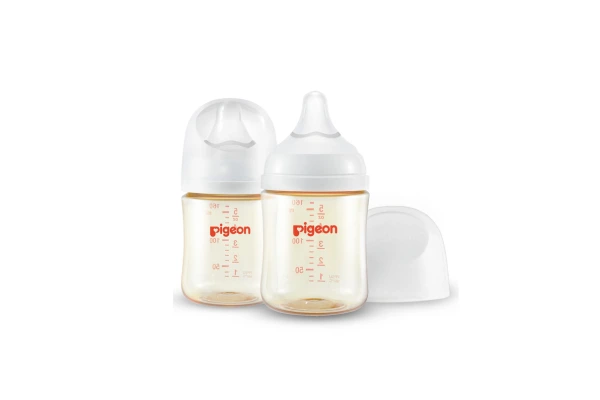
This Japanese brand is beloved by IBCLCs, especially for stubborn bottle refusers. The nipple has a unique latch line that shows you when your baby has latched deeply enough, and the gradually sloped nipple shape is textbook perfect. It’s made from PPSU, a higher-grade plastic that’s more heat-resistant and won’t absorb odors.
The only downside? They can be harder to find in stores, you’ll likely need to order online from Amazon or specialty retailers.
Where to buy: Amazon, Pigeon website
Price range: About $15-18 per bottle
3. Evenflo Balance+ Standard Neck
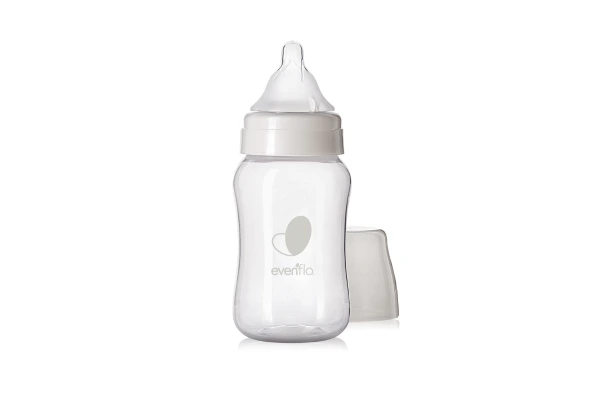
This bottle is recommended by 97% of parents and developed with pediatric feeding specialists. The naturally sloped nipple promotes a wide latch, the integrated one-piece venting system helps prevent colic, and the intentionally slow flow rate makes for calm, gulp-free feeding.
Where to buy: Amazon, Target, Walmart
Price range: About $6-8 per bottle
4. Philips Avent Natural with Natural Response Nipple
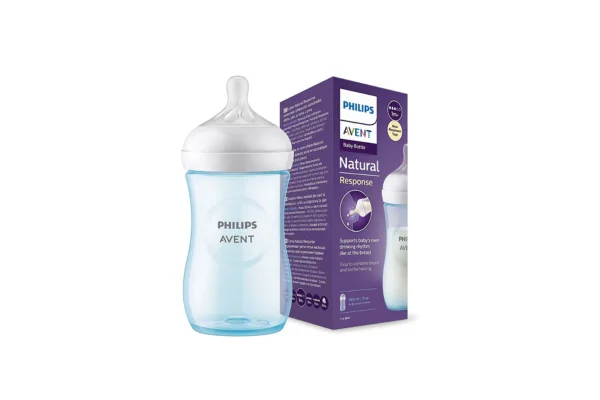
Philips Avent is widely available and trusted. Their Natural Response nipple only releases milk when your baby actively sucks, mimicking the breast’s let-down. The wide, soft nipple encourages a natural latch, and the anti-colic valve helps reduce gas.
Note: Make sure you’re getting the Natural Response nipple specifically, not their older Natural nipple design, as the Response version offers better flow control.
Where to buy: Target, Walmart, Amazon, Buy Buy Baby
Price range: About $7-8 per bottle
5. Dr. Brown’s Narrow Neck (Standard)
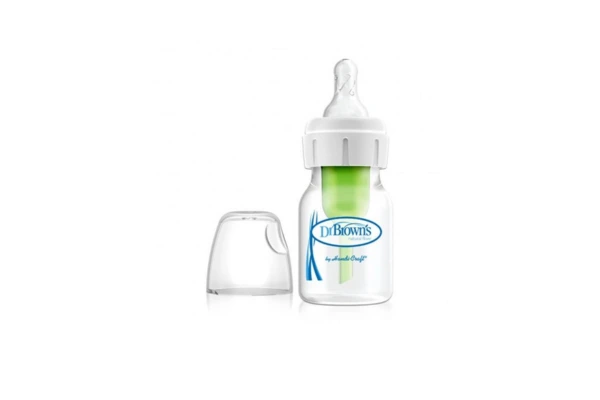
While many lactation consultants prefer wide-neck bottles, Dr. Brown’s narrow neck bottles have a devoted following. The narrow nipple allows babies to engage the entire nipple when latching, which can work well for some breastfed babies, particularly those with high palates or tongue ties. They’re also the #1 pediatrician-recommended bottle in the U.S. and are commonly used in NICUs.
The internal vent system is clinically proven to reduce colic.
Where to buy: Target, Walmart, Amazon, Buy Buy Baby
Price range: About $6-7 per bottle
Budget-Friendly Option: Evenflo Classic Clear bottles are under $2 per bottle and have a gently sloped narrow nipple that encourages a deep latch (they’re also compatible with Dr. Brown’s narrow nipples).
The Secret Weapon: Paced Bottle Feeding
Here’s something I wish someone had emphasized to me earlier: the technique matters just as much as the bottle.
Paced bottle feeding is a method that slows down the feeding and puts your baby completely in control, making bottle-feeding feel much more like breastfeeding. Here’s how to do it:
- Hold your baby in an upright position with plenty of head and neck support (not lying back like in traditional bottle-feeding)
- Hold the bottle horizontally or at a slight angle, so the nipple is only partially full of milk
- Touch the nipple to your baby’s upper lip and wait for them to open wide and pull the nipple into their mouth, don’t push it in
- After every 5-10 sucks, tip the bottle down slightly so the nipple stays in their mouth but milk stops flowing. Let them take a breath
- Switch sides during the feeding, just like you would when breastfeeding
- Watch your baby’s cues not the bottle. Let them tell you when they’re done, even if there’s milk left
This technique prevents overfeeding, reduces gas and spit-up, and most importantly, keeps breastfeeding and bottle-feeding feeling similar to your baby.
When to Introduce a Bottle (Timing Matters!)
Most lactation consultants agree: wait until breastfeeding is well-established before introducing a bottle, typically around 3-4 weeks (but ideally by 6 weeks). This sweet spot gives you time to establish your milk supply and your baby time to master breastfeeding, while they still have their natural sucking reflex to help them adapt to the bottle.
Introducing a bottle too early can interfere with establishing your milk supply and your baby’s latch. But waiting too long (past 6-8 weeks) increases the risk of bottle refusal, since babies become very set in their ways.
Pro tip: If you’re returning to work, start introducing the bottle 1-2 weeks before your first day back. Both you and your baby need time to adjust.
What About “Nipple Confusion”?
Let’s clear this up: “nipple confusion” isn’t exactly a myth, but it’s also not quite what most people think.
The truth is that breastfeeding and bottle-feeding require genuinely different tongue and jaw movements. Some babies can switch between the two with zero issues, while others struggle after just one or two bottle feeds. Research shows that bottle-feeding and breastfeeding involve different jaw movements and suction patterns.
The good news? You can minimize problems by:
- Using the right nipple shape and flow rate
- Practicing paced bottle-feeding
- Continuing to nurse frequently when you’re together
- Not introducing bottles or pacifiers until breastfeeding is established
If Your Baby Refuses the Bottle
Even with the perfect bottle, some babies are stubborn (been there!). Here’s what worked for me and what experts recommend:
- Have someone else offer the bottle, babies often refuse bottles from the breastfeeding parent because they can smell your milk and know the “real thing” is right there
- Try offering the bottle when your baby is just waking up or calm, not when they’re overly hungry and frustrated
- Experiment with different positions, sometimes holding baby facing away from you or while walking around helps
- Try warming the nipple under warm water before offering it
- Practice with a pacifier between feeding times to help them get comfortable with a silicone nipple
- Be patient and persistent, it often takes 2-3 feeding attempts for babies to adjust to a new bottle
How Much and How Often to Bottle Feed
Breastfed babies typically eat smaller, more frequent meals than formula-fed babies. When bottle-feeding breast milk:
- Newborns (0-2 months): 2-3 ounces every 2-3 hours (8-12 feedings per day)
- 2-4 months: 3-4 ounces every 3-4 hours
- 4-6 months: 4-5 ounces every 3-4 hours
Most breastfed babies max out at about 4-5 ounces per feeding, even as they get older, they just go longer between feeds. This is different from formula-fed babies, who tend to take larger bottles.
Important: Always watch your baby’s cues, not the numbers. If they turn away from the bottle or stop sucking actively, they’re done, even if there’s milk left.
Time To Say Goodbye
I know the world of baby products can feel overwhelming. Between the marketing claims, conflicting advice, and seeing other moms use completely different bottles than you, it’s easy to second-guess yourself.
But here’s what I want you to remember: focus on the fundamentals. A slow-flow nipple with a wide, gradually sloped base. Paced feeding technique. Patience with your baby as they learn something new.
And please, give yourself grace. It might take trying a few different bottles before you find the one your little one accepts. That’s completely normal and doesn’t mean you’re doing anything wrong.
Your baby is lucky to have a parent who’s doing this much research to support their feeding journey. Whether that’s all breast, all bottle, or a combination of both.
Disclaimer: This article is for informational purposes only and does not constitute medical advice. Please consult with your pediatrician or a certified lactation consultant (IBCLC) for personalized guidance regarding your baby’s feeding needs.