Choosing the right nipple cream is essential for breastfeeding mothers seeking relief from sore, cracked, or dry nipples. The best and safest options prioritize organic, food-grade ingredients that are safe for both mother and baby, require no removal before nursing, and provide effective soothing and healing properties. Based on extensive research, parent reviews, and safety assessments, here are the top five nipple creams available in the USA.
The 5 Best Nipple Creams for New Mums (2025)
After reviewing ingredients, expert recommendations, safety data, and real availability in the USA, here are my top five picks. I’ve personally researched each one to ensure they meet the highest safety standards for you and your baby.
1. The Honest Company Calm Your Nip Balm
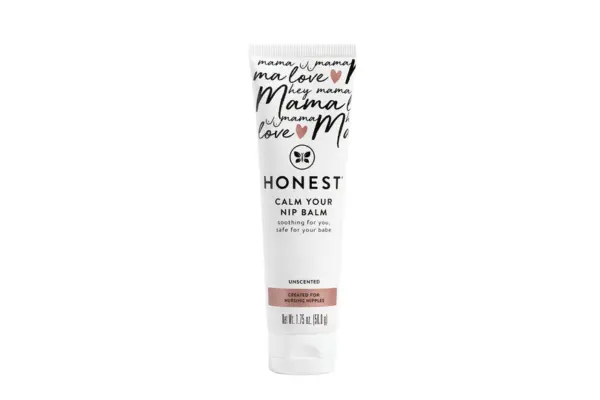
Winner of The Bump’s Best of The Bump Award, The Honest Company Calm Your Nip Balm stands out as the overall best nipple cream for breastfeeding. This USDA-certified organic cream features high-quality ingredients including shea butter, aloe, coconut oil, and jojoba seed oil. Parents consistently praise its smooth, lightweight texture that rubs in easily and lasts a long time.
Safety Features:
- Fragrance-free and lanolin-free, making it ideal for mothers and babies with sensitivities
- Hypoallergenic and dermatologist tested
- Free from petrolatum, silicones, PEGs, phthalates, and synthetic fragrances
- USDA-certified organic with clean, pronounceable ingredients
- Safe for baby to ingest, no need to wipe off before nursing
- Not tested on animals
The easy-to-use squeeze tube dispenses just the right amount of product, and at approximately $10-15, it offers excellent value for money. Product testers awarded it 5 out of 5 for both ingredients and ease of use.
Where to Buy: Target, Amazon, Walmart, CVS, The Honest Company website, Babylist, iHerb
Best For: Mothers with sensitivities or allergies to lanolin and fragrance, those seeking a lightweight cream that absorbs quickly without leaving residue, and anyone wanting an easy-to-dispense tube format
2. Earth Mama Organic Nipple Butter
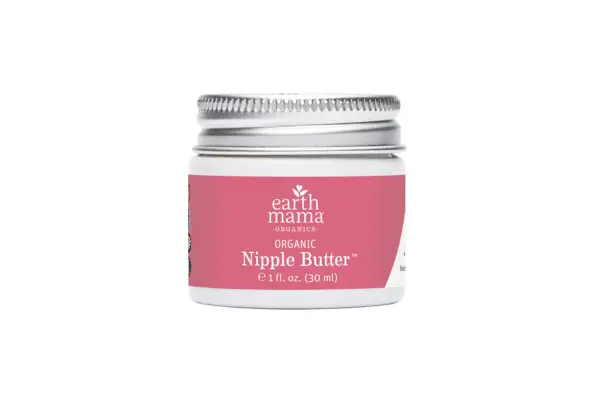
Earth Mama Organic Nipple Butter consistently ranks as one of the best nipple creams on the market and has been recognized as the top choice for the year by multiple parenting experts. This certified organic and non-GMO formula contains only food-safe ingredients, including olive oil, beeswax, cocoa seed butter, shea butter, mango seed butter, and calendula flower extract.
Safety Features:
- USDA-certified organic with minimal, clean ingredients
- All ingredients score a 1 (lowest possible risk) in the Environmental Working Group’s safety database
- Free from petroleum, preservatives, and lanolin
- Safe for baby consumption, no removal necessary before feeding
- Non-GMO project verified
- Fragrance-free (though has a mild chocolate scent from cocoa butter, which contains no caffeine)
Parents love its smooth texture and quick absorption. The cream is versatile enough to use as a lip balm, diaper cream, and skin moisturizer. At around $10-13 for a jar, it provides excellent value and lasts longer than expected despite the smaller container size.
Where to Buy: Target, Amazon, Walmart, Whole Foods Market, H-E-B, Earth Mama website, Instacart (same-day delivery available)
Best For: Overall best choice for most breastfeeding and pumping mothers, those seeking a lanolin-free organic option with anti-inflammatory and antibacterial properties from calendula, and multi-purpose use on lips, cheeks, elbows, and other dry skin areas
3. Motherlove Nipple Cream
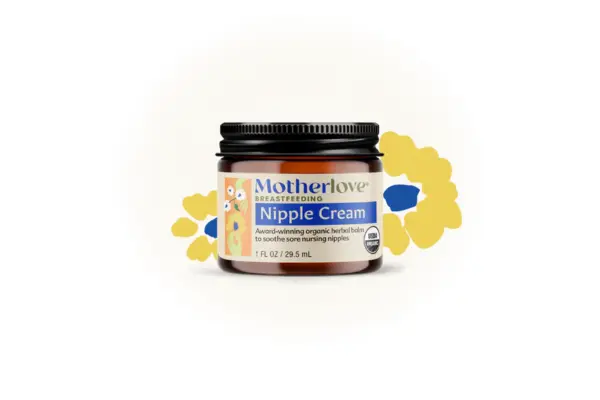
Motherlove Nipple Cream is recognized as the best nipple cream for breastfeeding moms by Healthline and receives consistently high ratings for its effectiveness and natural formulation. This woman-owned, family-run Certified B Corporation produces a 100% USDA-certified organic cream that’s also cruelty-free.
Safety Features:
- 100% USDA-certified organic ingredients
- Contains extra virgin olive oil, beeswax, shea butter, marshmallow root, and calendula flower, all food-safe
- Soy-free and free of common allergens
- Plant-based formula safe to apply before feeds
- No need to wipe off before nursing
- Sustainably made and cruelty-free
- Made in the USA
The cream features marshmallow root and calendula flower, which receive rave reviews from breastfeeding mothers for soothing pain and promoting quick healing. Product testers gave it 5 out of 5 for effectiveness and ease of use. The smooth consistency makes it easy to apply and absorbs well into the skin.
Where to Buy: Target, Amazon, Motherlove website, Babylist, major retailers nationwide
Best For: Best moisturizing nipple cream for mothers looking for a natural, plant-based option with minimal ingredients, those who prefer a smooth, thin consistency that’s easy to apply, and multi-use on chapped lips, baby’s dry cheeks, and other dry skin areas
4. Lansinoh Lanolin Nipple Cream
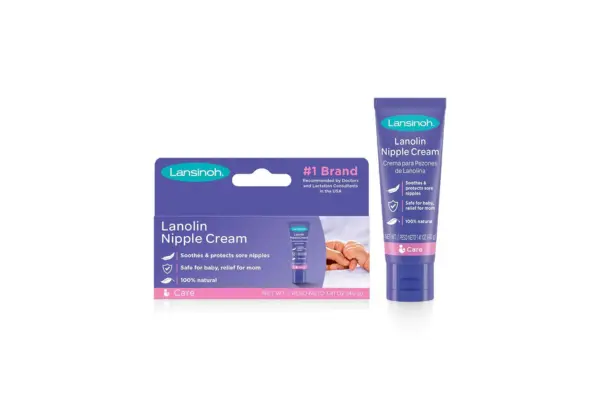
Lansinoh Lanolin Nipple Cream has been the #1 doctor-recommended nipple cream for 40 years and remains a gold standard in breastfeeding care. This single-ingredient formula contains only ultra-purified HPA lanolin, which has been clinically proven to significantly protect mothers’ skin.
Safety Features:
- 100% natural, ultra-purified lanolin with unique refining process
- No additives, preservatives, parabens, or petroleum
- Hypoallergenic and clinically tested for irritation
- Safe for baby, no removal needed before breastfeeding
- Ethically sourced and certified carbon neutral
- No animal testing
- Tasteless and odorless
Research shows that lanolin is considered pure and safe, containing no preservatives, additives, water, chemicals, or perfume. It creates a moist wound-healing environment that helps soothe and protect delicate skin. Studies indicate mothers who use it breastfeed 25% longer. However, those with wool sensitivities should use caution, as lanolin is derived from sheep’s wool.
Product testers awarded it 5 out of 5 for effectiveness and value for money, noting that a little goes a long way. At under $10, it’s the most affordable option on this list.
Where to Buy: Target, Walmart, Amazon, Walgreens, Kroger, HSA Store, Lansinoh website, major drugstores and retailers nationwide
Best For: Best lanolin-based nipple cream for severely cracked or damaged nipples needing a thick protective barrier, those on a budget seeking doctor-recommended relief, and mothers who prefer a single-ingredient, time-tested formula (avoid if you have wool allergies)
5. Bamboobies Organic Nipple Balm
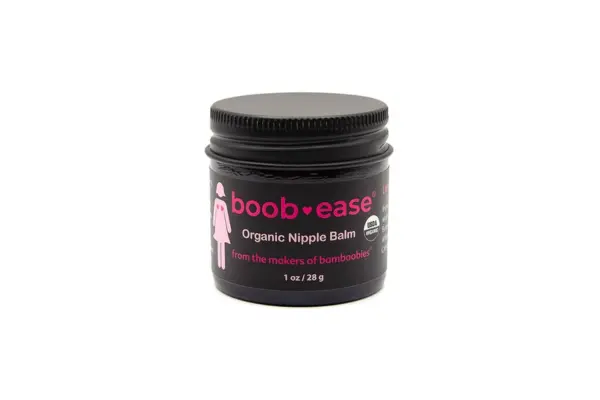
Bamboobies Organic Nipple Balm is recognized as the #1 organic nipple balm, with more mothers choosing it over other organic options. This USDA-certified organic formula provides plant-based, soothing relief with a simple five-ingredient formulation.
Safety Features:
- USDA-certified organic by Oregon Tilth
- 100% organic and non-toxic
- Lanolin-free, making it ideal for those with wool allergies
- Contains only five simple ingredients: olive oil, beeswax, shea butter, calendula flower, and marshmallow root
- Safe for baby ingestion, no need to wipe off before feeding
- No animal testing
- Made in the USA
The balm uses marshmallow root and calendula to soothe pain and promote healing, similar to Motherlove. It has a non-greasy, non-sticky texture that’s easy to apply and has minimal scent. Parents appreciate that it can be used for multiple purposes, including treating rashes, chapped lips, and dry skin. At approximately $12-13, it offers good value for an organic product.
Where to Buy: Amazon, Walmart, H-E-B, Bamboobies website, Target (limited availability), eBay
Best For: Best lanolin-free organic option for mothers and babies with wool sensitivities, those seeking a simple five-ingredient formula with calendula and marshmallow root, and multi-purpose use for rashes and dry skin
How to Apply Your Nipple Cream?
I learned through trial and error that how you apply nipple cream matters almost as much as which one you choose. Here’s what lactation experts recommend:
- Always start with clean hands. Wash thoroughly before applying any cream to prevent introducing bacteria to already-sensitive skin.
- Apply right after every feed. This gives the cream maximum time to absorb and work before the next nursing session.
- A pea-sized amount is plenty. You don’t need much! Warm it between your fingertips to soften it, then gently pat or smooth it over your entire nipple and areola. Don’t rub harshly—your skin is already tender.
- Let your nipples air-dry first. After feeding, allow your nipples to air-dry for a few minutes before applying cream and covering up. This prevents moisture-associated skin damage.
Never wipe off medical-grade creams. If you’re using any of the five creams I recommended above, they’re all completely safe for your baby, so you can leave them on. This is a huge relief when you have a hungry baby who wants to feed immediately!
Consider expressing a little breast milk first. Many experts suggest applying a few drops of your own breast milk to your nipples before the cream. Breast milk contains antibodies, growth factors, and natural antibacterial and anti-inflammatory properties that can aid healing. One study even found that expressed breast milk combined with breast shells was more effective than lanolin alone for healing nipple trauma.
Don’t use nipple cream on broken skin with herbal products. If you have cracked or bleeding nipples, avoid herbal or oil-based products as they can promote bacterial growth in open wounds. Stick with medical-grade lanolin or expressed breast milk in these cases.
What About Other Nipple Care Methods?
During my research, I discovered several other approaches that can work alongside or instead of nipple cream:
- Silverette (Silver Nursing Cups): These handcrafted 925 sterling silver cups are worn between feeds and have natural antimicrobial properties. Some mothers swear by them and find them more effective than creams alone. They’re reusable for years, making them cost-effective long-term, though the initial investment is higher (around ₹8,000-10,000). Research suggests they provide faster pain reduction than traditional creams in some cases.
- Hydrogel Pads: These cooling, soothing pads can provide immediate relief and are recommended by some experts for cracked nipples.
- Warm Water Compresses: One study found that warm water compresses were actually more effective than lanolin or breast milk for soothing sore nipples. They’re free, easy, and can help with blood flow to promote healing.
- All-Purpose Nipple Ointment (APNO): This prescription treatment contains an antibiotic, anti-inflammatory, and antifungal agent. Some lactation consultants recommend it for severely damaged or infected nipples, though not all experts agree on its effectiveness.
My Final Piece Of Advice
Mama, I cannot stress this enough: nipple cream is a band-aid, not a cure.
If you’ve been using cream for several days and you’re not seeing significant improvement, or if your pain is severe, please reach out for help. A certified lactation consultant (IBCLC) can watch you feed and identify exactly what’s causing the problem.
Here’s when you should definitely seek help:
- Pain that lasts beyond the first 10-14 days of breastfeeding
- Cracked, bleeding, or severely damaged nipples
- Nipples that look flattened, wedge-shaped, or white (like a new lipstick) after feeds
- Burning, stabbing, or shooting pain that continues between feeds
- Any signs of infection: yellow discharge, increasing redness, warmth, or fever
- Your baby isn’t gaining weight well or seems frustrated at the breast
Remember, using one of the best nursing pillows can also make a huge difference in achieving proper positioning for a comfortable, deep latch.
And if you’re pumping and experiencing pain, don’t assume that’s normal either! Check out resources on why pumping hurts and make sure you have the correct flange size—these are often the culprits.
You Are Doing an Amazing Job
Research shows that up to 35% of mothers still experience some nipple discomfort even after 8 weeks of breastfeeding—so if you’re struggling, you’re in good company. But with the right support, proper latch, and a soothing cream to help you through the tender early days, most mothers find that the pain resolves and feeding becomes comfortable.
Be kind to yourself. Trust your instincts. Ask for help when you need it. And know that every single feed you give your baby, even the painful ones, is an act of tremendous love.