Pumping hurts for many new mothers, but understanding why can transform your experience completely. If you’re reading this, chances are you’re feeling frustrated with your breast pump. Maybe it’s uncomfortable. Maybe your output isn’t what you expected. Maybe you’re just tired of being attached to a machine. Please hear me when I say this: everything you are feeling is completely valid, and you are not alone.
Learning to use a breast pump is a skill, just like learning to ride a bike. There’s a learning curve, and it’s completely normal to hit a few bumps along the way. Think of me as your gentle guide, here to help you troubleshoot without any judgment. You are doing an incredible job providing for your baby, and sometimes, a few small adjustments can make a world of difference.
Let’s walk through some of the most common pumping hurdles I’ve seen in my years as a mom, and more importantly, how to easily clear them.
3 Safe and Simple Ways to Thaw Frozen Breast Milk
The key to preserving all the incredible living components in your breast milk is to be gentle. Sudden or high heat can damage the nutrients and antibodies, so we always want to thaw and warm it slowly.
Here are the three safest methods, from best to fastest:
1. The Gold Standard: In the Refrigerator
This is the most gentle method and does the best job of preserving the milk’s delicate nutritional and immunological properties.
- How to do it: Simply move a frozen bag or bottle of milk from the freezer to the refrigerator.
- How long it takes: About 12 hours. A great habit is to move tomorrow’s milk into the fridge before you go to bed tonight.
- Why it’s best: The slow, controlled thaw is kind to the milk’s living cells. Once fully thawed, the milk is safe to use for up to 24 hours, as long as it stays in the fridge. This entire process starts with good habits, and it’s always helpful to have a refresher on how to store your breast milk correctly from the very beginning.
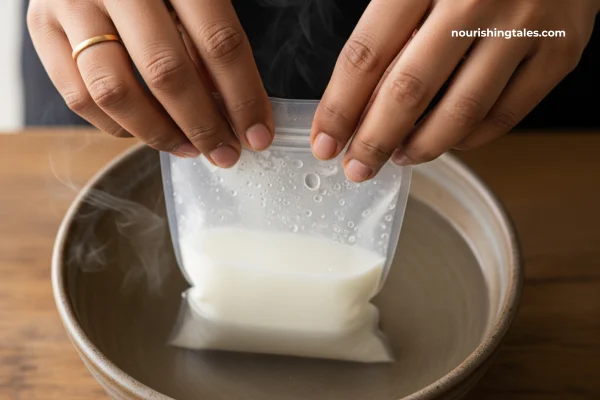
2. The Quicker Way: A Warm Water Bath
When you need milk a bit sooner, this is your next best option.
- How to do it: Place the sealed, frozen milk bag or bottle in a bowl of warm water. The water should feel comfortably warm to your touch—think baby bath temperature (around $40^\\circ C$)—but never hot.
- How long it takes: Usually around 20 minutes. You can swirl the bottle gently in the water to help speed things up.
- Important: Make sure the water level is below the seal of the bag or the top of the bottle to prevent any water from getting inside.
3. The ‘I Need It Now!’ Method: Under the Tap
For those moments when your baby is hungry right now and you need milk fast, this method works in a pinch.
- How to do it: Hold the sealed bag or bottle under a running tap. Start with cool water and gradually increase the temperature to lukewarm.
- How long it takes: Just a few minutes.
- Keep in mind: Milk thawed this way should be used for the immediate feeding.
The One Thing You Must NEVER Do: Use a Microwave
This is the most important rule of all, and it’s non-negotiable. Please, never, ever use a microwave to thaw or warm your breast milk.
It might seem like a quick fix, but it’s incredibly dangerous for two critical reasons:
- It creates dangerous “hot spots.” Microwaves heat unevenly, which means even if the bottle feels okay, there can be scalding hot pockets of milk inside that can severely burn your baby’s delicate mouth and throat.
- It destroys the “liquid gold.” The intense heat from a microwave destroys the amazing living components in your milk—the vital antibodies, enzymes, and proteins that protect your baby from illness. Microwaving sadly undoes all the incredible work your body did to create it.
Your Quick Cheat Sheet: The Do’s and Don’ts
Here are a few more golden rules to keep in mind for every feed.
- DO swirl, never shake. You’ll notice the fatty cream separates and rises to the top—this is totally normal! A gentle swirl is all you need to mix it back together. Vigorous shaking can damage some of the milk’s fragile protein structures.
- DO test the temperature. Before feeding, always put a few drops on the inside of your wrist. It should feel lukewarm or neutral, never hot.
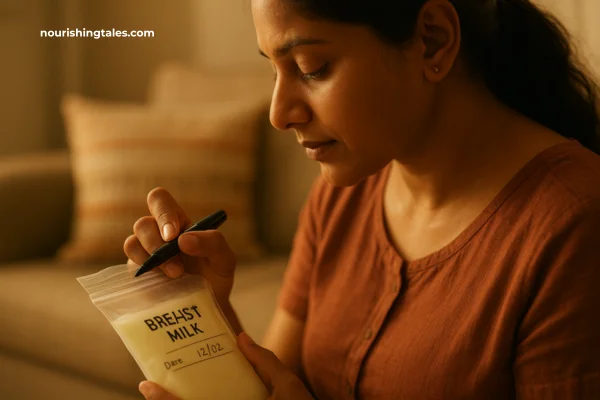
- DO use the oldest milk first. Label every bag or bottle with the date you expressed it, and follow the “first in, first out” rule to make sure no milk goes to waste.
- DON’T refreeze thawed milk. Once milk has been thawed, it cannot be put back in the freezer. This increases the risk of harmful bacteria growth. Any thawed milk your baby doesn’t finish within the 24-hour window must be discarded.
- DON’T add fresh, warm milk to already chilled milk. If you want to combine milk from different pumping sessions, always cool the fresh milk in the fridge first before adding it to an already cold or frozen batch.
A Little Secret: Does Your Baby Really Need Warm Milk?
We often assume that babies need their milk served warm, but this isn’t necessarily true! It is perfectly safe and healthy to offer your baby milk that is room temperature or even cool from the fridge.
Some babies prefer it warm because it feels more like nursing directly from you, but many others are perfectly happy with cooler milk. Give it a try! If your baby accepts it, you’ve just saved yourself a step and made your life a little easier.
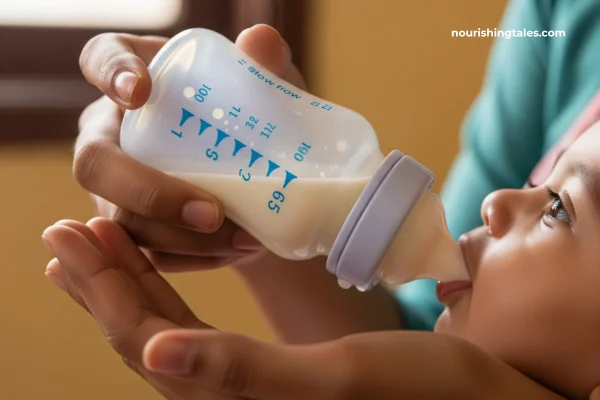
Once the milk is ready, how you offer the bottle matters, too. Our guide to paced bottle-feeding can help make feeding a calm, comfortable experience and is a wonderful technique for all breastfed babies. And if you’re struggling because your little one is pushing the bottle away, please know you’re not alone.
You’re Doing an Amazing Job
Preparing a bottle of your own milk for your baby is a true act of love. By following these simple, gentle guidelines, you can feel completely confident that you’re preserving all the nutritional goodness and protecting your baby with every single feed.
Remember the key takeaways:
- Thaw Gently: Use the fridge, a warm water bath, or lukewarm running water.
- Never Microwave: This protects your baby from burns and your milk from damage.
- Use Within 24 Hours: Once thawed, milk kept in the fridge is good for one day.
Keep up the incredible work, mama. You’re doing beautifully.
Disclaimer: This article provides general information and is not a substitute for professional medical advice. Please consult with your paediatrician or an International Board Certified Lactation Consultant (IBCLC) for personalized guidance.